Built for working musicians.
Find the gig. Find the player. Run the band. Jamigo brings gigs, musicians, calendars, band chat, set lists and gig-day coordination into one place.
The problem
The gig is in eleven places at once.
The call time is in a text. The address is in a different text. The set list is a photo of a napkin. Who is actually coming is buried eighty messages deep in a group chat, and the one person who knows the parking situation is asleep.
- Texts
- Group chats
- Facebook posts
- A spreadsheet
- Two calendars
- Notes app
- Screenshots
- Voice notes
- A phone call at 11pm
None of it is wrong. It is just scattered, and scattered is how a gig goes sideways. Jamigo keeps the same work in one place, in the order it actually happens.
Availability & calendar
Your schedule should help you get work.
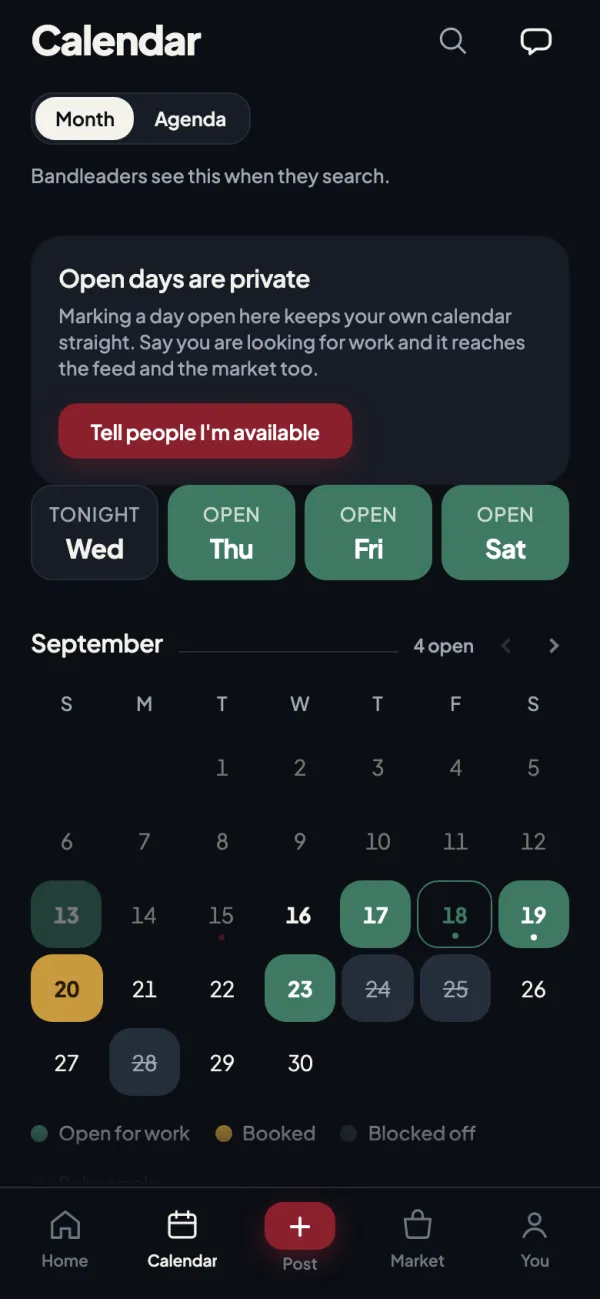
Open a day and bandleaders searching for someone that night can find you. Mark the days you are usually free once — every Friday, never Sundays — and Jamigo fills the rest in.
Nobody sees your calendar. They see that you are free. Booked gigs, rehearsals and days you blocked off are yours, and a recurring rule never overrides something real.
- Open for work
- Booked
- Blocked off
Market
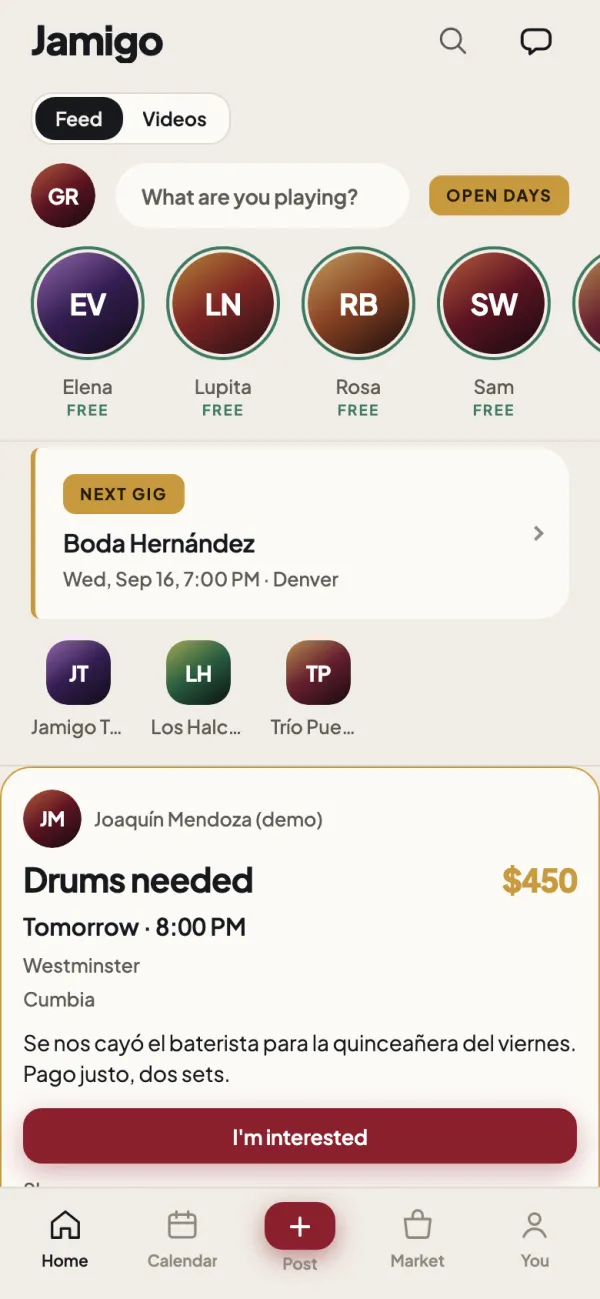
Find work. Find the missing player. Find gear.
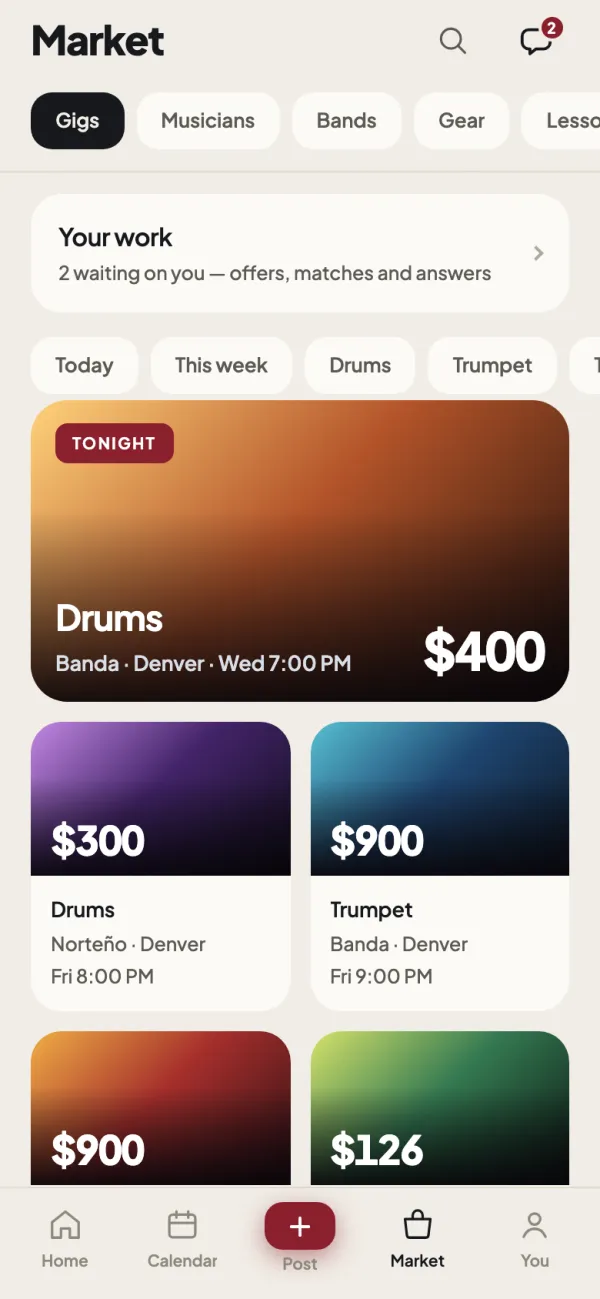
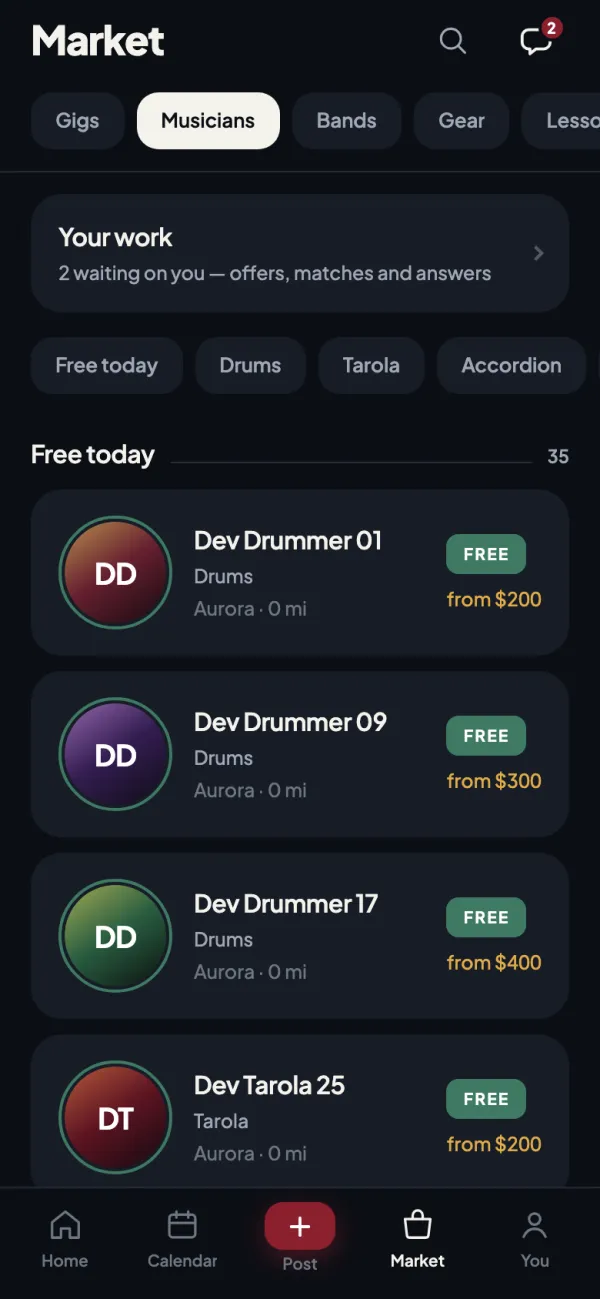
Five lanes, one surface: Gigs, Musicians, Bands, Gear and Lessons. Filter by instrument, by style, by tonight, by this week.
- Gigs show the money, the instrument, the date and the city before you tap.
- Musicians are ranked by instrument, style, distance and who is actually free — never by follower count.
- Lost a drummer at 6pm? Search people who are open tonight, in range, on that instrument.
Bands
A band is an operation. Jamigo runs it.
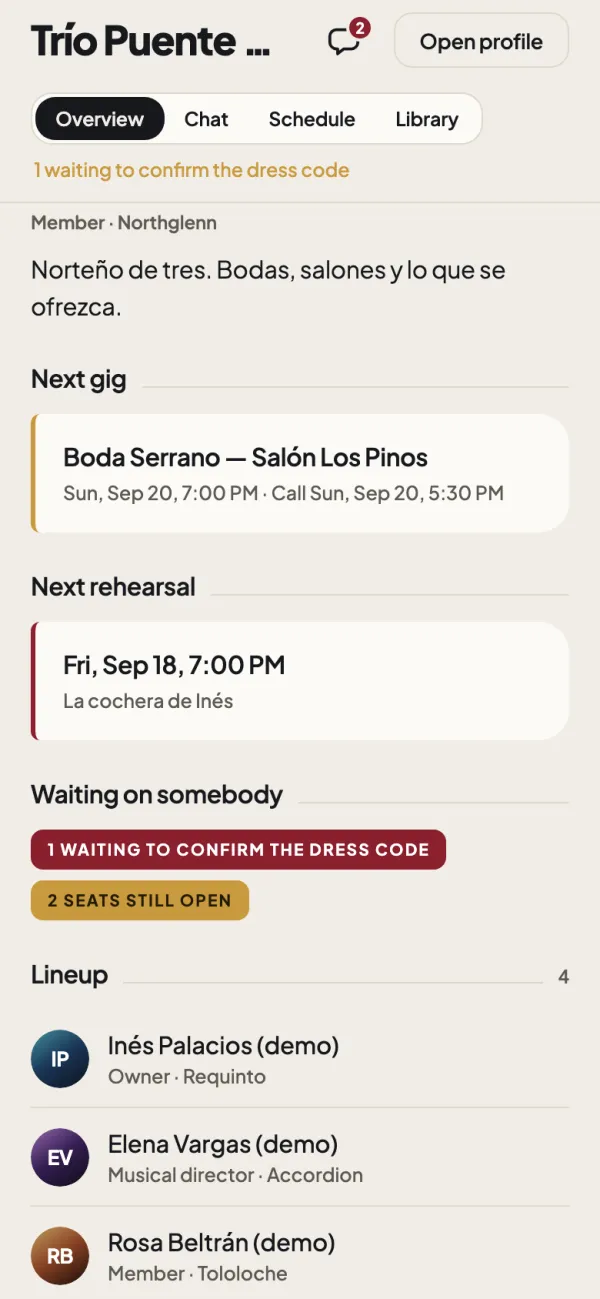
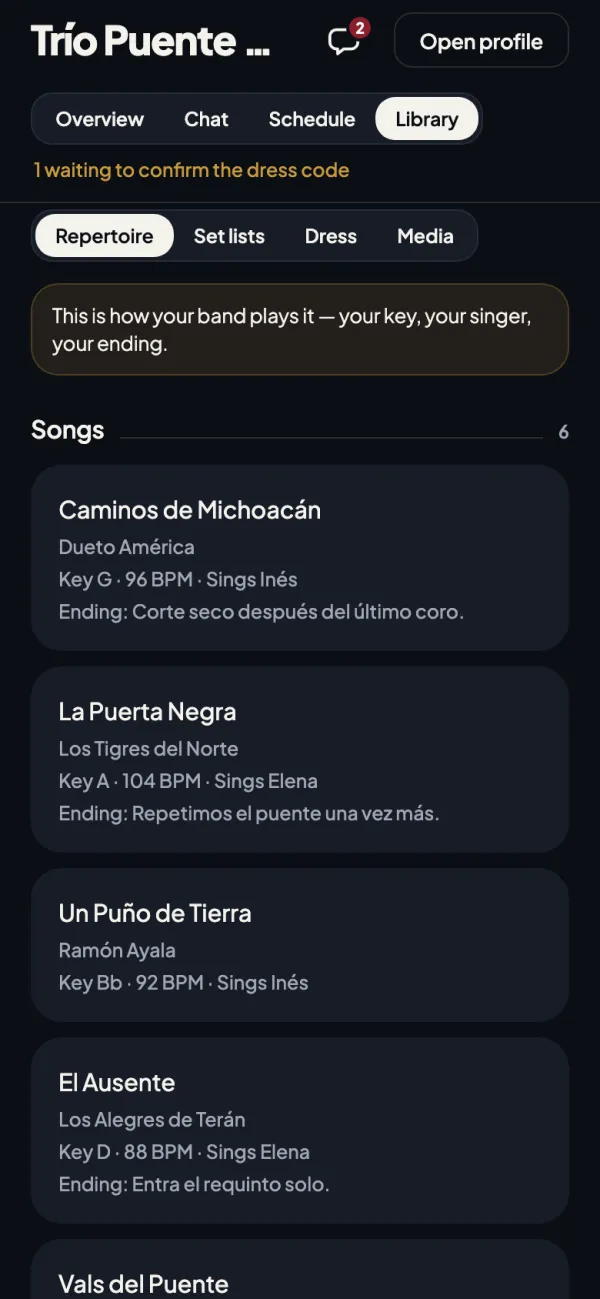
One workspace per band: who is in it and what they play, one chat, the schedule, and the library the band actually works from.
- Members with real roles — owner, band leader, musical director, manager, member, recurring substitute — and each one can do a different thing.
- Rehearsals with a time, a place and who said they are coming.
- A library of the band's songs, keys, tempos and who sings what — plus set lists and dress codes.
- Open positions, so a band that needs a sax player can say so.
Set lists & the gig brief
Stop burying the gig eighty messages deep.
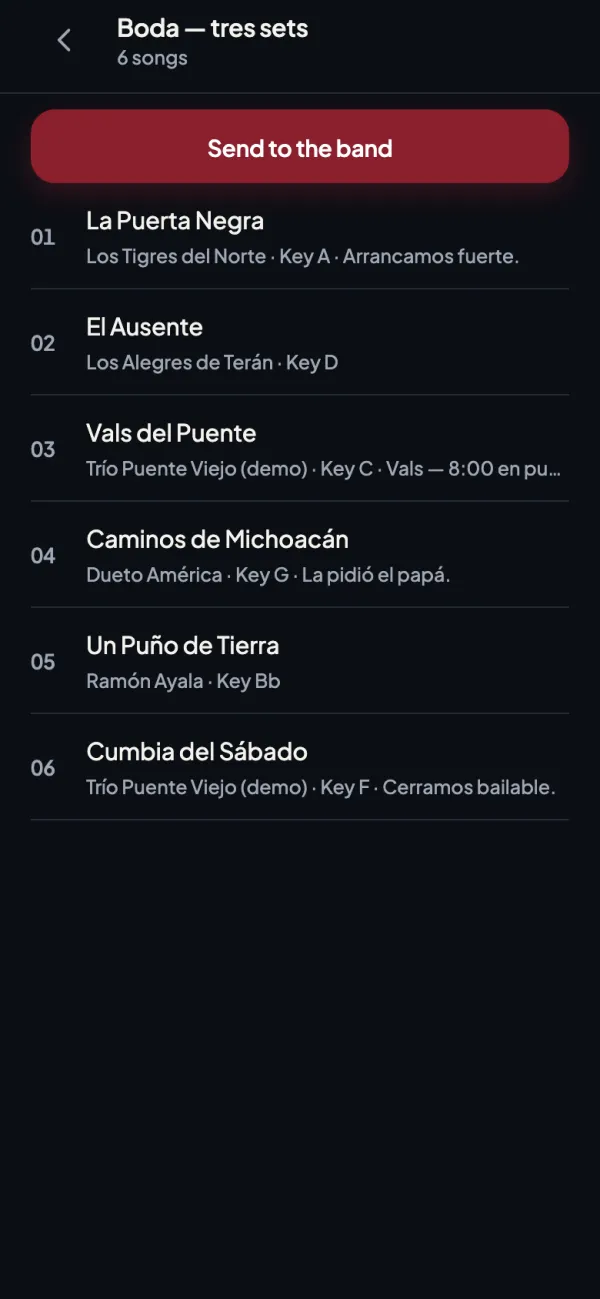
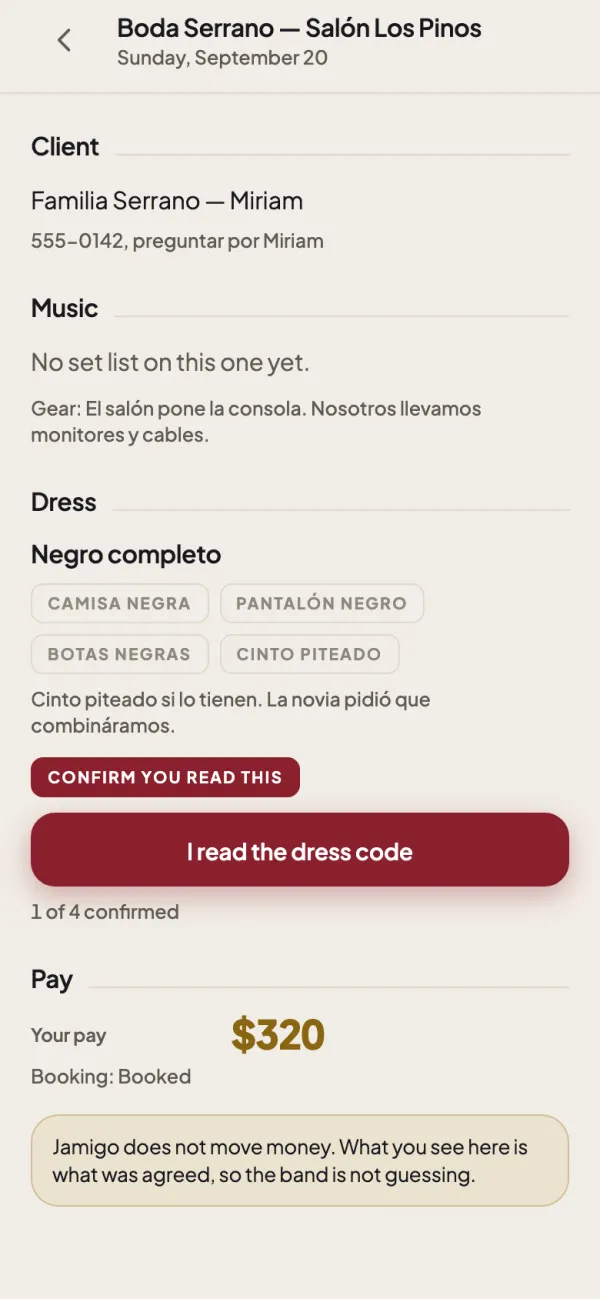
Build the set once — order, keys, the note about the waltz at eight — and send it to the band. Everything else about the night sits on one screen: venue, call time, load-in, sound check, the client, the dress code.
A dress code can require an acknowledgement, so the leader can see who has actually read it rather than hoping. Pay is shown the way the band chose: leader only, your own pay, or the whole total.
Jamigo does not move money. What you see is what was agreed, written down so the band is not guessing. Payment happens the way it always has, between the people involved.
The day of the gig
Everybody knows who is coming, and when.
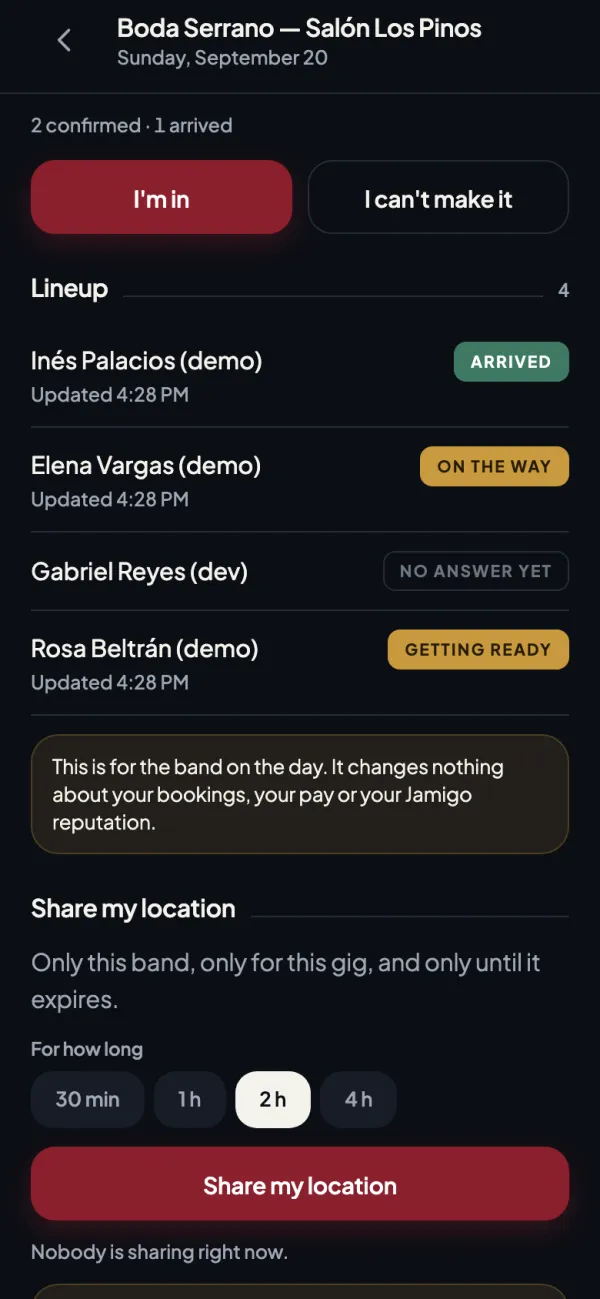
One screen for the night itself. Say you are in, or say you cannot make it — early enough that it can be fixed. Then the lineup shows where everybody actually is.
- Getting ready
- On the way
- Arrived
- No answer yet
You can share your location with the band — only that band, only that gig, and only until it expires. Jamigo keeps your last position, never the route, and it stops when you arrive or when the timer runs out.
In the browser this is foreground only. Location updates while the app is closed need the mobile app, and Jamigo says so on the screen rather than pretending.
Messaging
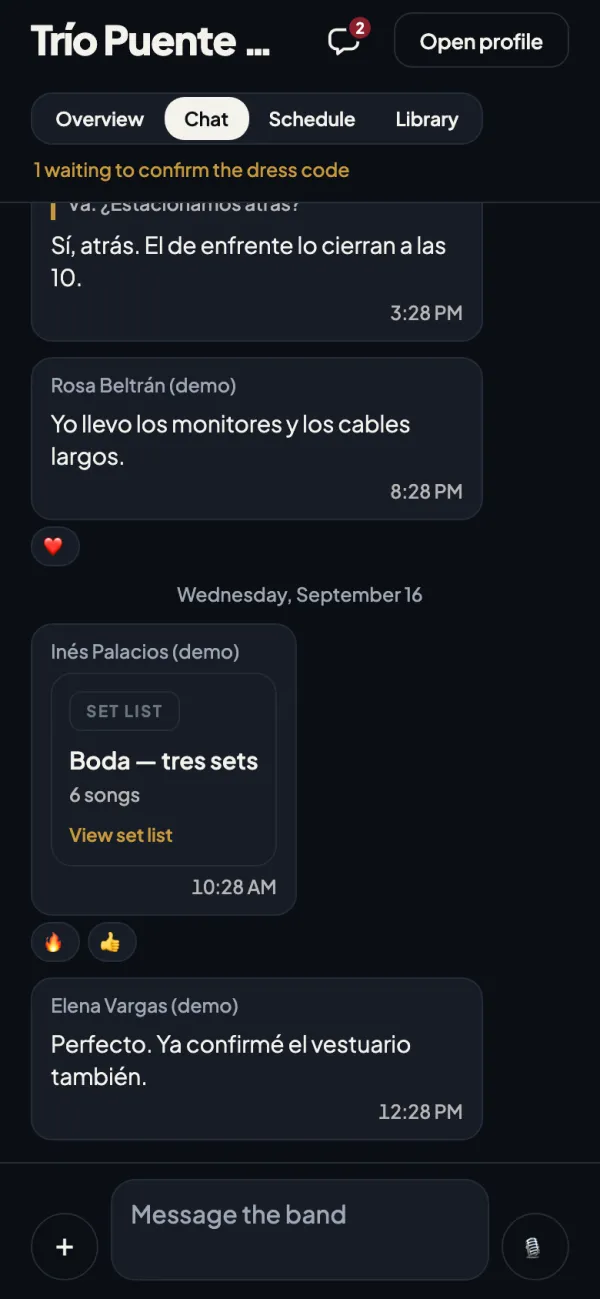
Every conversation is attached to something real.
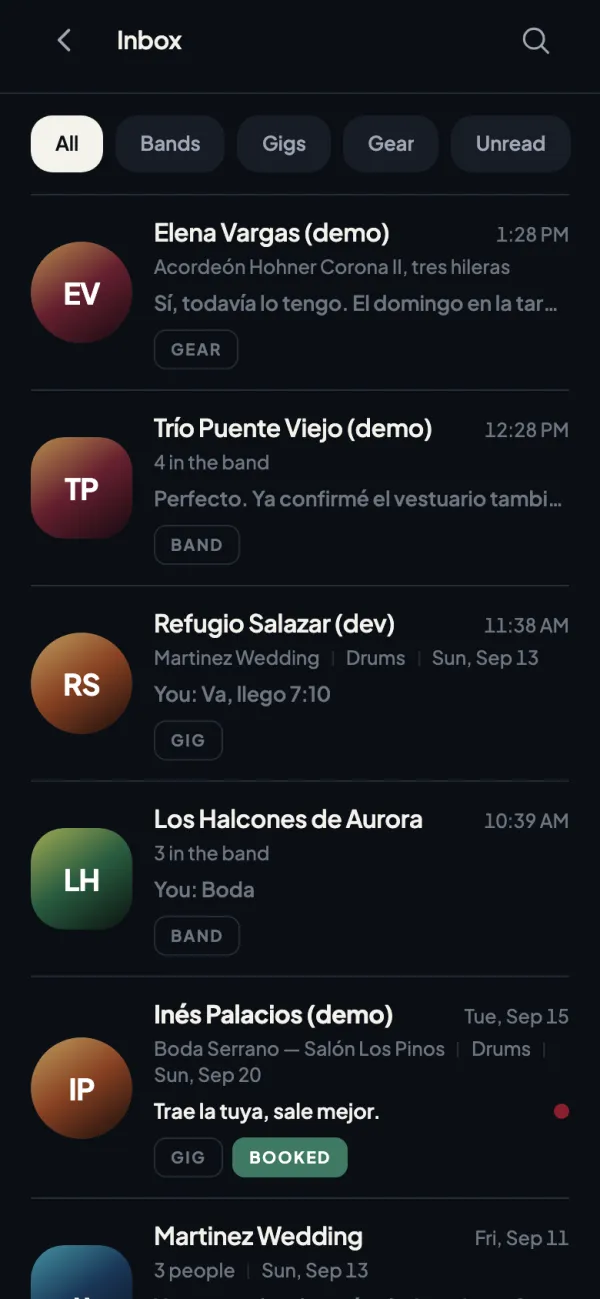
One inbox, and each thread belongs to a band, a gig, a piece of gear or a job. You always know why you are talking to someone, and there are no cold DMs — a conversation exists because there is work behind it.
- Replies, so an answer stays attached to its question.
- Reactions, because eight people typing "👍" is not a conversation.
- Set lists posted as a card you can open, not a screenshot that goes stale.
Clips & musical identity
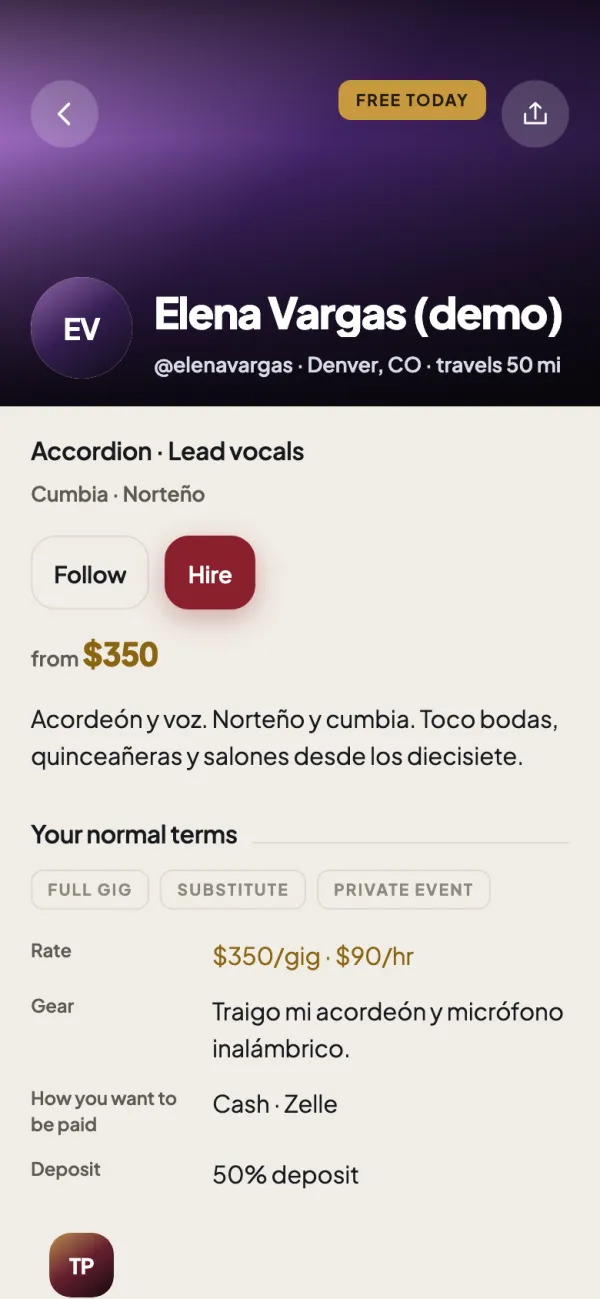
Bandleaders should hear you play, not read a résumé.
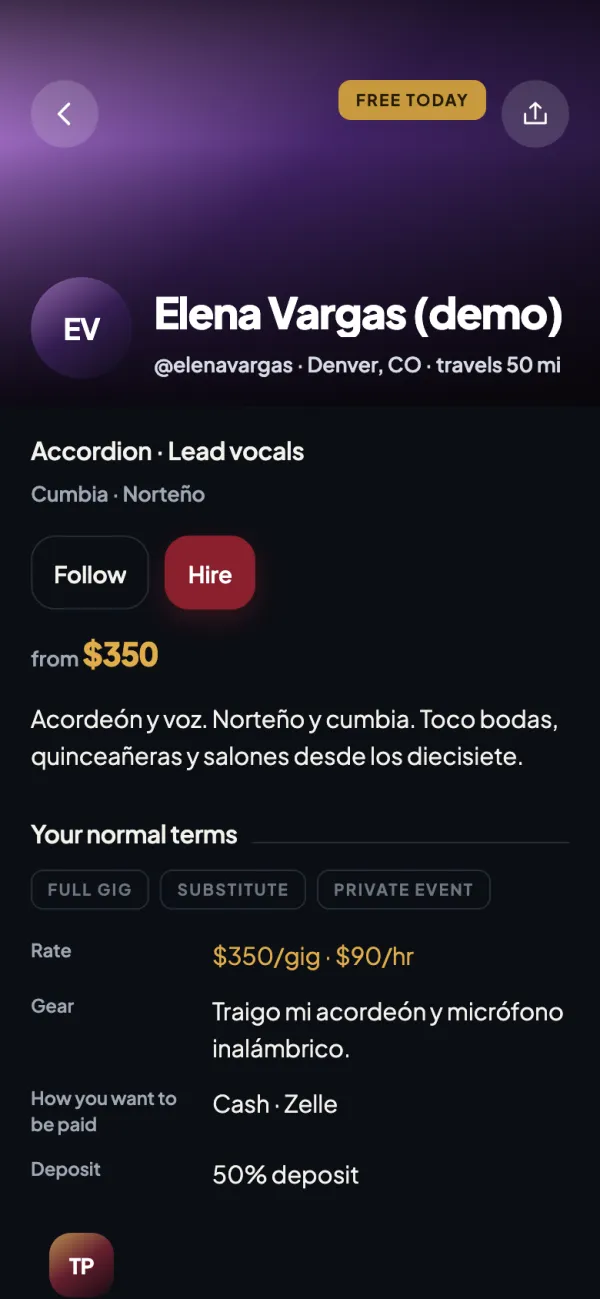
Your profile leads with the thing that actually decides the call: what you play, what you sound like, where you travel and what you cost. Post a clip — under sixty seconds, you actually playing — and it sits on your profile and in Videos, the vertical feed on Home.
Videos is live in the beta and starts empty for everybody. There is no stock footage here and none in the product: the first clips will be real musicians.
Reputation
Earned on the bandstand, not in the feed.
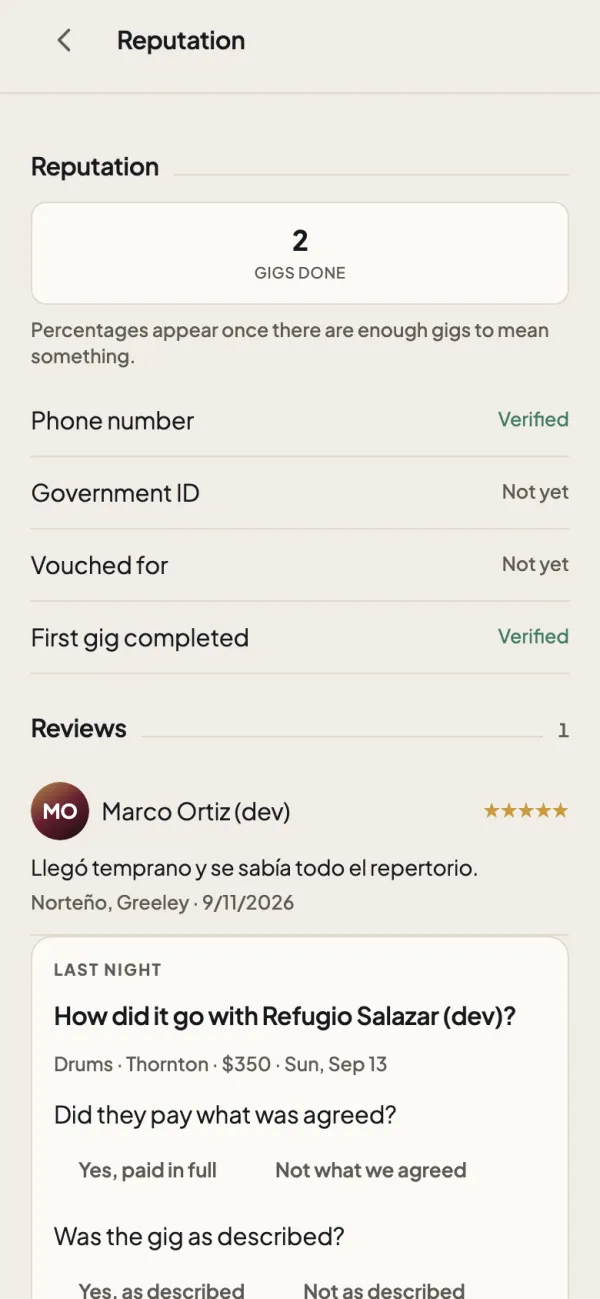
Reputation on Jamigo comes from work: gigs completed, and what the people on them said afterwards. Follows, posts and likes are sociable, and they are deliberately kept out of it — they never touch who gets found, matched or hired.
After a gig, both sides answer two plain questions: were you paid what was agreed, and was the gig as described. Percentages only appear once there are enough gigs for them to mean anything.
Gear
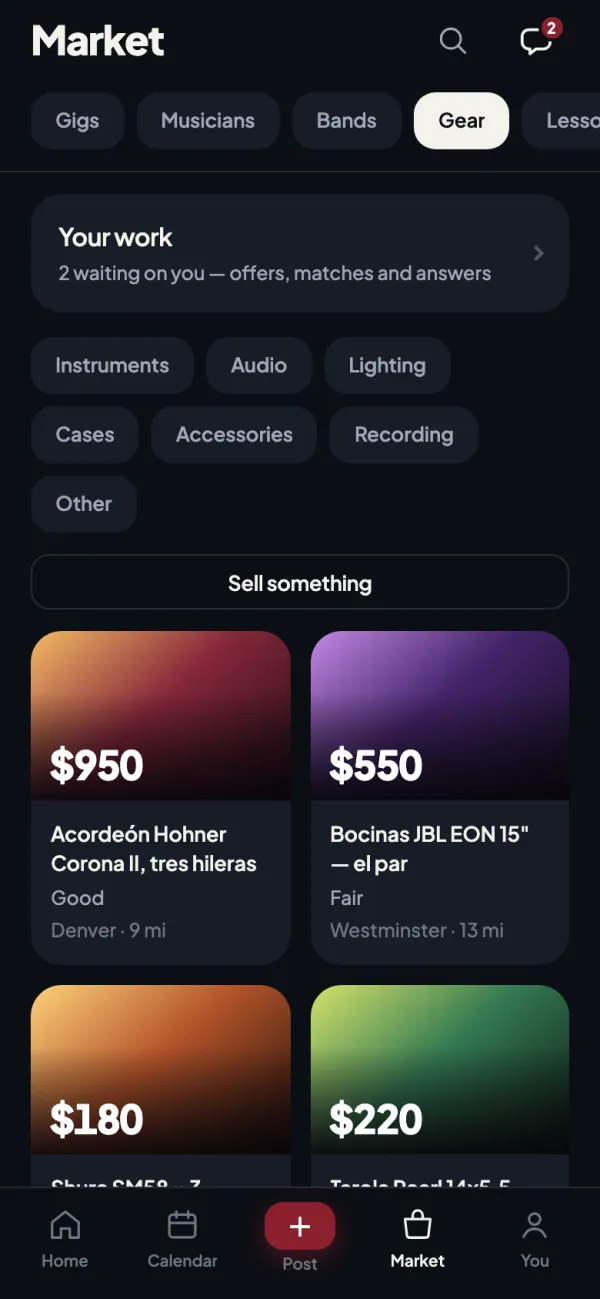
Sell the amp to someone who knows what it is.
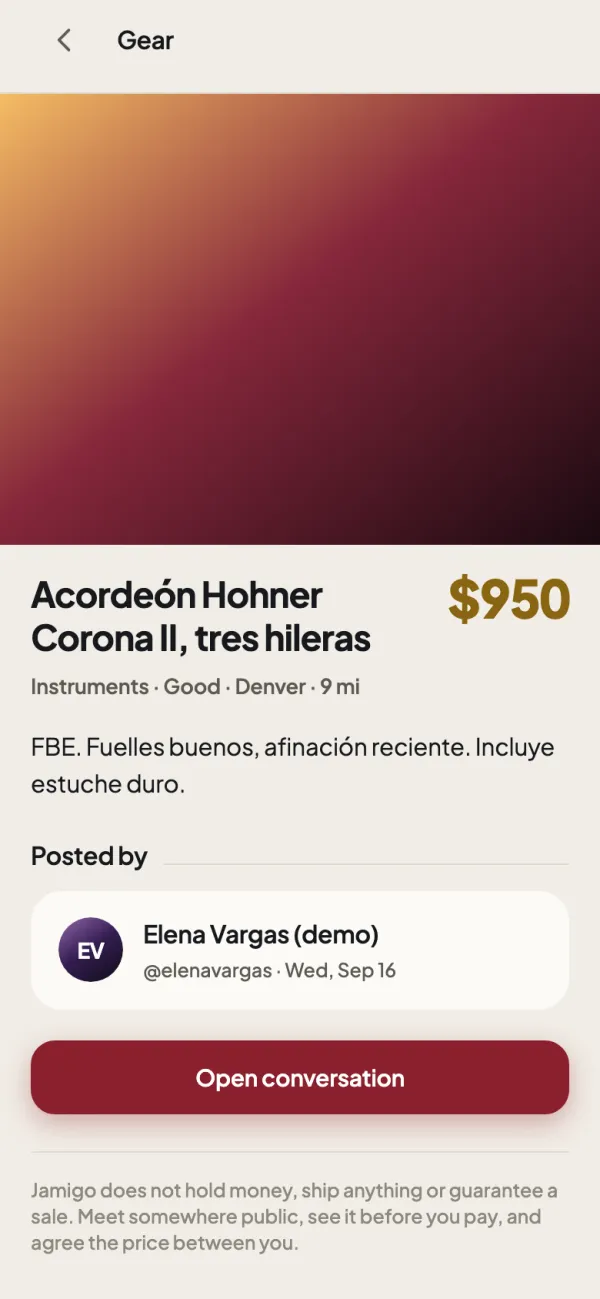
List an instrument, an amp, a PA, cables — with condition, price and photos — and talk to people who already play. Interest opens a conversation in the same inbox as everything else.
Jamigo does not handle the sale. No escrow, no shipping, no payment protection. It connects the two of you and gets out of the way; meeting somewhere public is still the right idea.
How it works
Six things, in the order they happen.
The loop a working musician already lives, with the paperwork taken out of it.
Build your profile
Instruments, styles, where you travel, your rate, what you bring and how you want to be paid. Said once, carried everywhere.
Say when you're free
Open a day, or set the days you are usually free. Your calendar stays private — only "free" is public.
Get found, or go looking
Bandleaders search by instrument, style, distance and availability. You search the same Market for work.
Talk about a real thing
A conversation opens because there is a gig, a band or a listing behind it. Terms are on the table from the first message.
Coordinate the gig
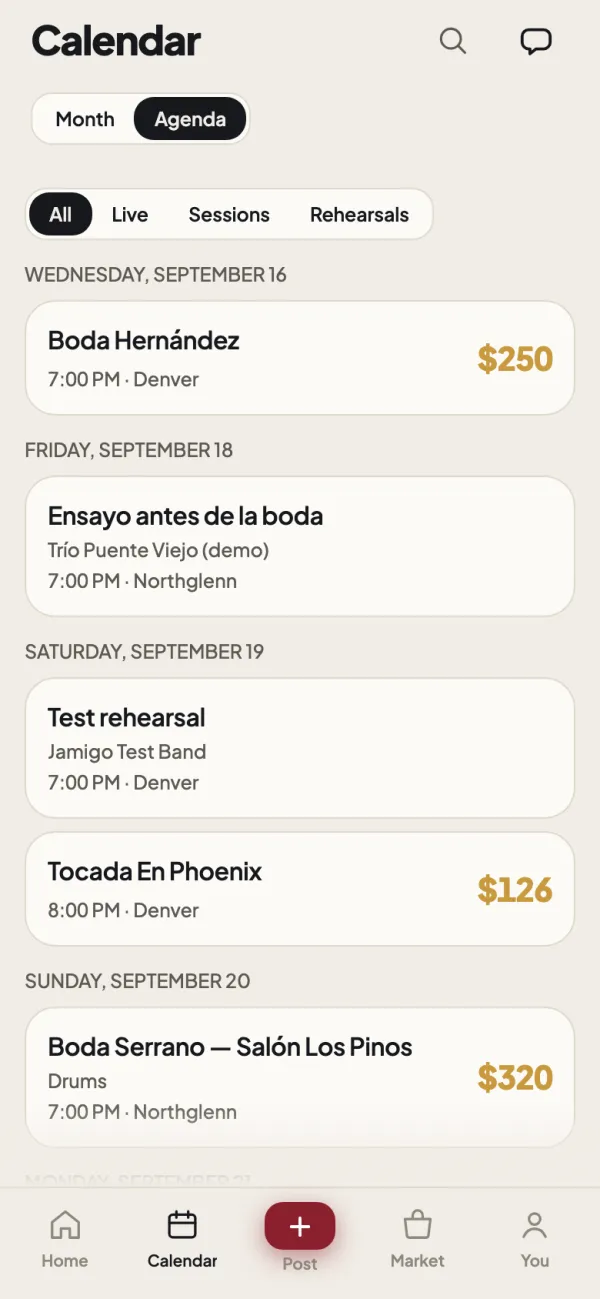
It lands on your calendar. The band gets the set list, the call time, the dress code and the address in one place.
Build your history
Play it, get paid, and the gig counts. Your record is the work, not the follower count.
The beta
Jamigo is live in beta.
We are building Jamigo with working musicians, bandleaders and crews who actually use it — on real gigs, in real weeks. It runs in the browser today. Open it and tell us what breaks.
- I'm free
- I get found
- We talk
- I'm booked
- It hits my calendar
- The band coordinates
- We play
- My reputation grows